

How Search Engines Evaluate Link Signals
Table of Contents
- Introduction
- Relevance of Links
- Authority and Trustworthiness
- Anchor Text Significance
- Link Placement and Visibility
- Link Diversity and Freshness
- User Engagement Metrics
- E-E-A-T Framework
- Conclusion
Introduction
Understanding how search engines assess link signals is vital for any website owner or digital marketer seeking to build online authority and visibility. In today’s competitive digital landscape, links serve as endorsements from one web page to another, providing search engines with critical clues about content quality and trust. These endorsements are not simply a numbers game—search engines utilize advanced machine learning techniques to analyze not just the quantity but the value and relevance of these links as they relate to particular topics and searches.
Effective management of link-building strategies becomes one of the key pillars for sustainable online growth, as it amplifies the chance of a site appearing in top search results for competitive queries. To learn more about effective strategies to earn valuable links, visit this page.
Each link to your site acts as a vote of confidence, but not all links carry the same weight or credibility in the eyes of search engines. Modern algorithms have become exceedingly adept at distinguishing between endorsements based on genuine value and those that might be artificially generated for the purpose of manipulating rankings.
Factors like the context in which a link appears, the topical closeness of the referring domain, and patterns in linking behavior all contribute to the perceived impact of each backlink. By evaluating relevance, authority, placement, diversity, and user engagement tied to these links, search engines can decide which pages deserve top rankings and which may need further vetting before they can be considered trustworthy resources for users.
Relevance of Links
A link’s actual value starts with its relevance. Search engines prioritize backlinks originating from content closely related to your site’s niche or industry, interpreting these connections as genuine, editorially given endorsements rather than random insertions. For instance, a well-reputed marketing blog that links to an SEO tool provider demonstrates contextual alignment, which benefits search rankings by confirming the topical connection between the linking and linked pages.
This relevance not only provides a more powerful endorsement signal in the ranking algorithm but also ensures that visitors arriving through these links have interests strongly aligned with the content you offer. Links from unrelated sources, on the other hand, are less likely to impact your rankings positively, and in some cases, may even trigger closer scrutiny from search engines. For more on Google’s approach to link evaluation, see the official documentation from Google Search Central.
Authority and Trustworthiness
Websites possessing an established reputation in their field exert greater influence through their endorsements, making high-authority sources especially valuable for those aiming to build trust and visibility online. Search engines consider domain authority—a composite measure that factors in the age of the domain, the overall quality of its content, the robustness and variety of its backlink profile, and the level of trust it has earned in its field—when weighing how much value a link transfers.
Receiving a link from renowned organizations, authoritative news outlets like The New York Times, or long-standing and respected industry blogs can be transformative for your website’s search performance. Such links serve as strong indications that your content merits a place among the most visible resources in your area of expertise. Securing these types of endorsements, however, usually requires consistently producing high-quality, unique content that stands out from competitors and meets the evolving needs of your target audience.
Anchor Text Significance
The words used in the clickable portion of a hyperlink, known as anchor text, play a vital role in how search engines interpret and rank linked content. Descriptive, keyword-rich anchor text—such as “on-page SEO techniques” or “best productivity apps for writers”—offers clear guidance about what the linked page is about, helping both users and search algorithms to identify topical relevance swiftly. Over time, a thoughtful anchor text strategy can contribute significantly to the clarity and depth of a website’s topical authority.
In contrast, generic anchor text like “click here” or “this website” provides little information, making it harder for algorithms to categorize the content, which can dampen the positive impact of a backlink. Users also benefit from effective anchor text, as it helps them set realistic expectations before clicking a link, ultimately improving their browsing experience and increasing the likelihood they find what they are looking for.
Link Placement and Visibility
Where a link appears on the page strongly impacts its value and effectiveness. Links that are integrated within the main body content, especially those surrounded by relevant and informative context, are typically considered far more influential than those relegated to navigation menus, footers, or sidebars. This is because links in prime content areas are more likely to be editorially chosen and directly related to the material, indicating a deliberate vote of confidence from the publisher.
Main content links are also more discoverable and are statistically more likely to attract real user clicks, which boosts their perceived value. Algorithms are designed to assess these factors, interpreting well-placed links as a signal of high editorial endorsement and recognizing them as trustworthy signals when determining rankings.
Link Diversity and Freshness
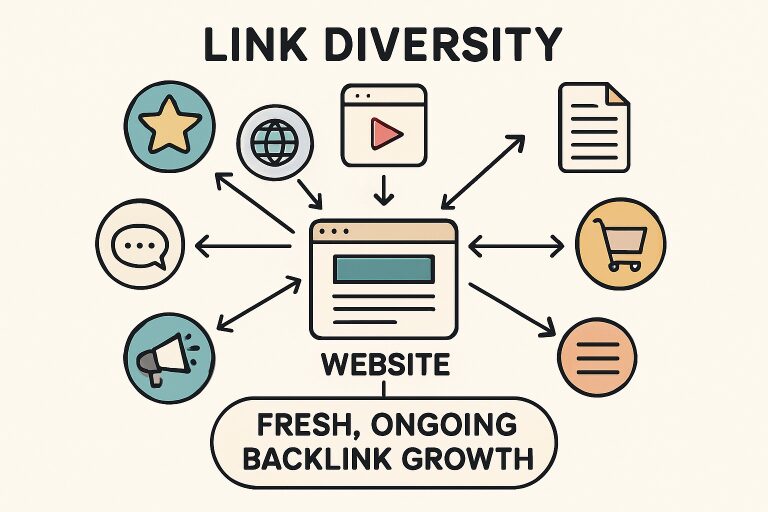
Search engines reward sites that attract a naturally diverse portfolio of links, including those from different domains, various geographic locations, and across a mix of content formats such as blog posts, news articles, industry directories, and multimedia resources. A backlink profile that demonstrates varied, widespread recognition from multiple trusted sources is seen as far more authentic and organic.
This kind of diversity indicates that your content resonates across a variety of audiences and contexts and reduces the risk that your link-building approach will be flagged as manipulative or artificial. Additionally, acquiring new links over time—as opposed to seeing sudden and unnatural spikes—demonstrates to search engines that your website continues to deliver value and remain relevant.
Sustaining a steady influx of quality links helps your website maintain or steadily improve its rankings, especially as algorithms continuously evolve and user interests shift. Consistent monitoring and ongoing outreach to build fresh connections are essential for long-term SEO success.
User Engagement Metrics
Search engines don’t limit themselves to just analyzing the existence or number of links—they also assess how users interact with those links to gauge their real-world value. Signals such as click-through rates on individual backlinks, average time spent on the destination page, scroll depth, and the frequency of return visits all provide tangible evidence of a link’s utility and relevance.
High engagement indicates that users trust the referral and find the destination content helpful or interesting, which in turn strengthens the link’s positive influence on rankings. These user behavior metrics enable search engines to distinguish between links that serve a legitimate informational purpose and those that are mere attempts at gaming the system, thereby ensuring that search results stay high-quality, practical, and relevant to global audiences.
E-E-A-T Framework
Google’s E-E-A-T framework—which stands for Experience, Expertise, Authoritativeness, and Trustworthiness—serves as a guiding principle in assessing both the quality of links and the overall value of the content to which they point. When a website or author is widely recognized as an expert in their subject area, their endorsements carry significantly more weight for both search engines and users.
A link from a trusted authority or a respected industry thought leader acts as an external validation of your website’s value. Search engines take this into account, rewarding content from sources that continually demonstrate deep expertise and consistent reliability.
Adhering to E-E-A-T principles means not only producing accurate, high-quality content but also establishing a reputation for credibility and knowledge—factors that naturally attract valuable links over time and improve your overall site performance in search rankings.
Conclusion
Optimizing for link signals is about more than simply accumulating backlinks; it’s about developing a holistic and strategic approach that puts user value and content quality first. Success depends on cultivating contextual relevance, demonstrating proven authority, securing natural placements, building an authentically diverse backlink profile, and driving measurable user engagement.
By aligning your link-building efforts with the sophisticated criteria search engines use to judge link value, you not only boost your ranking potential but also enhance the experience and usefulness your website offers its visitors. Effective link strategies will continue to play a foundational role in SEO, helping businesses and individuals achieve sustainable search visibility and long-term growth in a dynamic digital environment.