
How to Choose the Right Water Heater for Your Home
Table of Contents
- Types of Water Heaters
- Assessing Your Household Needs
- Energy Efficiency and Costs
- Fuel Types and Availability
- Installation Considerations
- Maintenance and Lifespan
- Environmental Impact
- Conclusion
Selecting a water heater that fits your home can make a significant difference in how comfortable and energy-efficient your living environment is. With the range of options available today, making an informed choice ensures you get reliable hot water while managing your energy bills wisely. If you need professional help or timely service, consider water heater repair and replacement in Indianapolis for expert assistance right in your area.
A well-matched water heater accounts for the unique needs of your household, including the number of people, lifestyle, and the types of energy sources readily available. Choosing wisely will also help you benefit from efficiency incentives and potential cost savings over the lifespan of your unit.
Before making a purchase, it is important to evaluate both upfront costs and long-term benefits such as energy efficiency, rebate opportunities, and environmental considerations. Not every home needs the same water heater type, so taking the time to review all your options can lead to both immediate and lasting gains for your household.
Government programs and energy companies sometimes offer incentives that can offset higher initial costs associated with efficient models, including heat pump and solar options. Staying aware of these opportunities can help you make the best financial and environmental choice.
Types of Water Heaters
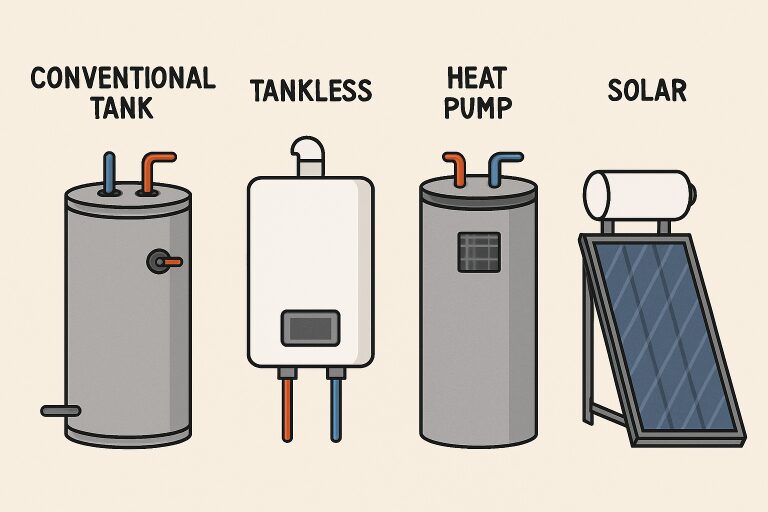
Understanding the main varieties of water heaters will help you choose a unit that offers the best performance and value:
- Conventional Storage Water Heaters: These are the most common type in many homes. They keep a set volume of water heated and ready for use, which is handy for consistent and simultaneous hot water demand.
- Tankless (On-Demand) Water Heaters: Rather than storing hot water, these only heat it when there is demand. They are compact and can lead to substantial energy savings in homes with lower overall hot water usage.
- Heat Pump (Hybrid) Water Heaters: These use electricity to pull heat from the air or ground, transferring it into the water. Their high efficiency is ideal for those wanting long-term savings and lower utility bills.
- Solar Water Heaters: Relying on solar energy, these systems require a larger initial investment but are a sustainable solution that minimizes ongoing operational costs.
Assessing Your Household Needs
The correct size and type of water heater hinge on how your family uses hot water. Singles, couples, and large households all have different needs that will affect the right solution for your home. Here are the main points to consider:
- Household Size: The size of the tank or unit will depend on how many people live in your home. For example, a family of four is often best served by a 50 to 80-gallon capacity for storage heaters, while tankless models should be sized for peak demand.
- Peak Demand Periods: Take note of when your household most frequently uses hot water, such as in the mornings or evenings. A properly sized system helps ensure you never run out of hot water when it matters most.
Energy Efficiency and Costs
Energy efficiency plays a central role not only in reducing your house’s carbon output but also in maintaining manageable utility bills. The most important factors to review include:
- Energy Factor (EF) Ratings: Products with higher EF ratings are more efficient. Look for labels and certifications, especially if considering tankless models, as many have EF ratings over 0.8.
- Operating Costs: Assess the total lifetime cost, including expected repairs, maintenance, and energy consumption. High-efficiency models, while more expensive upfront, can lead to significant savings over the years of service.
You can also benefit from tax credits and rebates, especially if you opt for a heat pump water heater. The current federal tax credit of up to $2,000 covers 30% of the installed cost and expires at the end of 2025, so now is an ideal time to invest.
Fuel Types and Availability
The available fuel source will narrow your choices and affect installation and daily costs. Most homes use one of these options:
- Electric: Easy to install and found almost everywhere. However, electricity can sometimes be more expensive in terms of operation unless paired with a highly efficient unit.
- Natural Gas: Preferred where gas lines exist, this fuel type typically results in lower operating costs. Proper ventilation is necessary for safety.
- Solar: If you have a suitable roof and climate, solar can provide significant long-term savings and aligns well with sustainable living goals.
Installation Considerations
Even the most efficient system will not deliver its potential benefits without proper installation. Here are the key practical considerations:
- Space Requirements: Make sure you have enough clearance for the specific water heater, especially for larger or newer types such as hybrid or solar systems.
- Ventilation: If your choice is gas or propane, professional installation is critical to ensure proper exhaust ventilation and prevent safety hazards.
Maintenance and Lifespan
Proactive maintenance not only extends the service life of your water heater but also ensures reliable operation year-round:
- Conventional Storage Heaters: Expected to last 8 to 12 years. Annual flushing to remove sediment is recommended to maintain efficiency and water quality.
- Tankless Heaters: These efficient models can last over 20 years. Regular descaling is necessary if you have hard water.
Environmental Impact
One of the best steps you can take to reduce your household’s environmental footprint is to upgrade to a higher-efficiency water heater. Heat pump water heaters and solar units are particularly effective for lowering greenhouse gas emissions and supporting sustainable living.
Conclusion
Selecting the right water heater takes thoughtful evaluation of your needs, consideration of available energy sources, and awareness of incentives. By making a careful choice, you can secure a reliable source of hot water, reduce ongoing costs, and lower your household’s environmental impact for years to come.